Custom AI voice agents are no longer experimental tools — they are becoming foundational components in modern business infrastructure. When engineered correctly, they don’t just automate conversations; they execute tasks, integrate with backend systems, enforce compliance, and operate at scale with low latency and full observability. Unlike off-the-shelf solutions that trade control for convenience, custom-built agents offer long-term cost efficiency, adaptability, and strategic ownership. This guide breaks down the architecture, implementation process, integration patterns, cost structure, QA methodology, and compliance considerations necessary to deploy production-grade voice automation that aligns with your business goals and operational constraints.
(more…)Real-Time Voice Agents: Why Static Voice Bots Are Already Obsolete

Most traditional voice bots still operate like automated phone menus: you speak, the system waits, then it replies. That kind of rigid, turn-based interaction made sense when AI was slow and brittle. But in 2025, with the emergence of streaming architectures and multimodal LLMs, the game has changed completely.
(more…)2026: GenAI in financial services after DORA. Why “quick pilots” no longer pass, and why Intellectum Lab AI Control matters
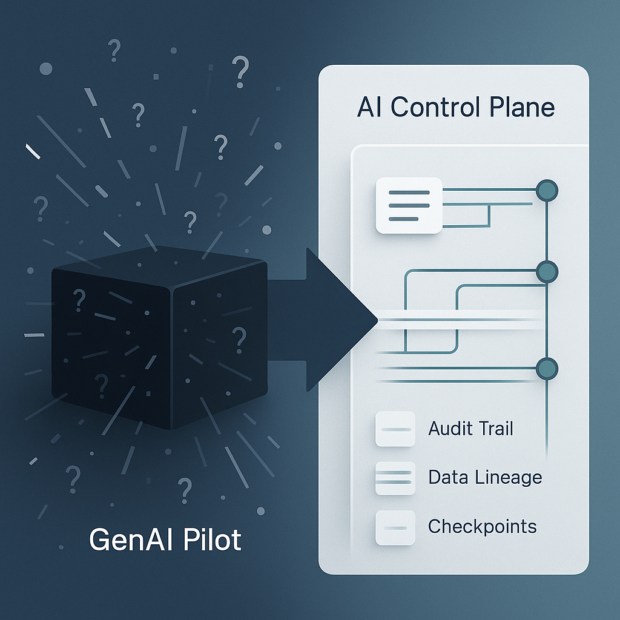
Introduction: 2025 happened, but the real questions started in 2026
From 17 January 2025, DORA (the Digital Operational Resilience Act) stopped being “an IT regulation on paper” and became day-to-day reality for EU financial entities. By 2026, most organisations have already felt it in practice: early reviews, first audit cycles, tabletop exercises, board reporting. The conversation is no longer about impressive demos. It’s about control.
(more…)